
Call us now :08045816367
 Send Inquiry
 Send Inquiry
Solenoid Valves Types
Solenoid Valves Types Specification
- Type
- 2/2 Way, 3/2 Way, 5/2 Way, Direct Acting, Pilot Operated
- Material
- Brass / Stainless Steel / Aluminium
- Power
- 6 W to 14 W
- Pressure
- 0.5 to 10 Bar
- Voltage
- 24V DC, 110V AC, 230V AC
- Electrical Entry
- DIN Connector / Flying Leads
- Thread Type
- BSP / NPT
- Manifold Type
- Single / Multiple
- Working Presssure
- 0.5 to 10 Bar
- Media
- Air, Water, Oil, Gas
- Port Size
- 1/8 to 2
Solenoid Valves Types Trade Information
- Supply Ability
- 1000 Per Month
- Delivery Time
- 7 Days
- Main Domestic Market
- All India
About Solenoid Valves Types
Leading the international market, we are highly reckoned for manufacturing and exporting a great range of Solenoid Valves. These are basically electro-mechanically operated devices, specially designed to handle the most demanding fluid control applications. We offer these Solenoid Valves to clients in different standard sizes to meet their individual application requirements.
Features:
- Weather and explosion proof enclosure
- Rust proof finish
- Sturdy design
Further Details:
We are engaged in manufacturing and exporting a wide range of Solenoid Valves, which is largest selection of 2-way, 3-way and 4-way solenoid valves. These are designed to handle the most demanding fluid control applications for air, gases and oils. The range includes 2/2 way, 3/2 way, which is normally closed and open, 4/2 way, 5/2 way and both direct and pilot operated solenoid valves. These solenoid valves are developed to suit the actual working conditions, thus these are manufactured using advance technology.
Technical details
|
Types |
2way & 3way Normally closed / Normally open. |
|---|---|
|
Sizes |
1/8" BSP & 1/4" BSP; M10 x 1.0, & M14 x 1.5 |
|
Orifice |
1.50mm Standard , other Sizes on request. |
|
Pressure |
0 to12kg / cm2. |
|
Body Material |
POWDER COATED Aluminium Body. Brass and Stainless steel against Specific orders. |
|
Media |
AIR, WATER, & Non corrosive liquids & gases. |
|
Manual over-ride |
Optional. |
|
Solenoid Data |
Epoxy moulded water proof Continuous duty coils,6 to 230 VAC, 6 to 220 VDC, 6.5 watts. Optional Terminal Junction Box can be provided on all Coils. |
Versatile Media Compatibility
Designed with robust NBR, FKM, or EPDM seals, these solenoid valves accommodate a wide range of media, including air, water, oil, and gas. This flexibility makes them suitable for diverse applications in industries such as manufacturing, process automation, water treatment, and more.
Flexible and Reliable Operation
Offered in both normally closed (NC) and normally open (NO) variants, our solenoid valves can be installed in any mounting position. The rapid response time (<20 ms) and continuous duty cycle (100% ED) ensure consistent performance where quick actuation and reliability are vital.
Durable Construction for Demanding Environments
Choose from brass, stainless steel, or aluminium bodies to match process requirements and ensure corrosion resistance. With IP65 protection, these valves are shielded against dust and water ingress, supporting operation in harsh settings.
FAQs of Solenoid Valves Types:
Q: How do I select the appropriate seal material for my solenoid valve application?
A: The choice between NBR, FKM, and EPDM seals depends on the media and temperature requirements. NBR is suitable for water and oils, FKM for aggressive chemicals and higher temperatures, and EPDM for steam, water, or glycol-based fluids. Assess your systems compatibility to choose the best option.Q: What are the main benefits of using Class F or H coil insulation in these solenoid valves?
A: Coil insulation Classes F and H provide higher thermal resistance, supporting continuous operation (100% ED) without overheating. This ensures durability and minimizes maintenance in demanding and high-cycle applications.Q: When should I use a direct acting versus a pilot operated solenoid valve?
A: Direct acting valves are ideal for low-flow or low-pressure applications and small port sizes. Pilot operated valves suit higher flows, pressures, and larger port sizes, as they use system pressure for actuation. Selection depends on your systems flow and pressure requirements.Q: Where can these solenoid valves be installed?
A: These valves can be mounted in any position and are suitable for indoor or outdoor environments, given their IP65 protection rating. They are widely used in industrial automation, fluid control systems, and process industries.Q: What is the process for installing a solenoid valve with manifold type configuration?
A: For manifold configurations, connect the valves to a multiple port manifold using the recommended thread type (BSP/NPT). Secure electrical connections via DIN connector or flying leads, and ensure the valves are compatible with your control voltage.Q: How does the fast response time of under 20 ms benefit my system?
A: A rapid response time allows for precise and immediate actuation, critical in automated systems requiring high-speed performance and accurate flow control. This feature enhances process efficiency and reliability.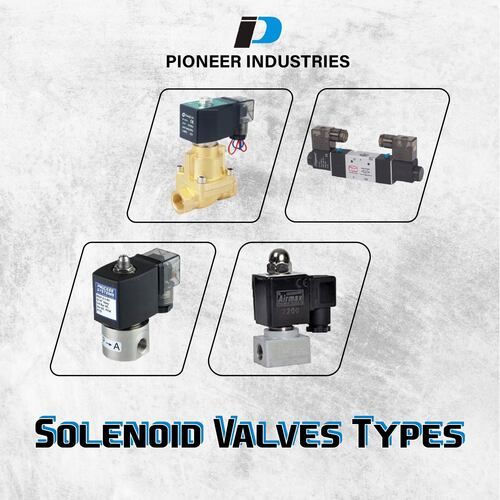
Tell us about your requirement

Price:
Quantity
Select Unit
- 50
- 100
- 200
- 250
- 500
- 1000+
Additional detail
Mobile number
Email

More Products in Pneumatic Valves Category
Pneumatic Solenoid Valves
Material : Other, Aluminum, Stainless Steel
Pressure : Other, 0.15 to 0.8 MPa
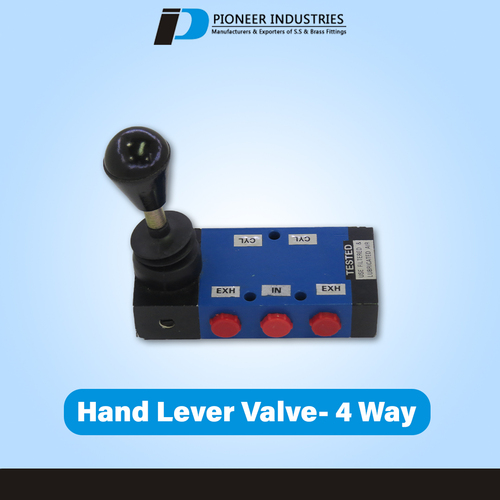
3 Way Hand Lever Valve
Product Type : Bottom Loading Tanker Valves
Size : 1/2 NB (15mm) To 6 NB (150mm) For Flanged ends 1/2 NB (15mm) To 4 NB (100mm) For Triclover ends 1/2 NB (15mm) To 3 NB ( 80mm) For Screwed ends 1/2 NB (15mm) To 2 NB ( 50mm) For Socket weld ends
Color : Blue
Usage : Industries
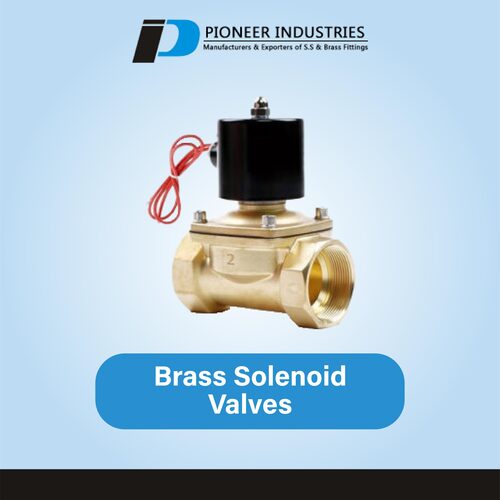
Brass Solenoid Valves
Material : Brass
Pressure : Low Pressure
Product Type : Solenoid Valves
Size : 1/8 BSP & 1/4 BSP
Color : Brass
Usage : Industrial
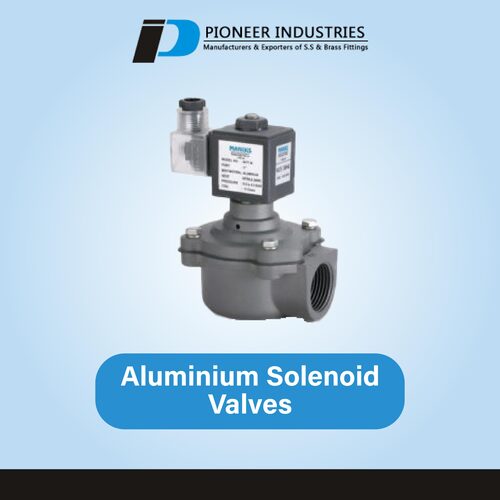
Aluminium Solenoid valves
Material : Aluminum
Pressure : Low Pressure
Product Type : Solenoid Valves
Size : 1/8 BSP & 1/4 BSP
Color : Aluminium
Usage : Industrial

Our Main Export Markets are USA, Australia etc.
 Send Inquiry


Our Products
- Stainless Steel Tube Fittings
- Stainless steel Valves
- Manifolds Valve
- Brass Pipe Fittings
- Brass Valve
- Ball Valves
- Pneumatic Valves
- Special Valves
- Forged Brass Fittings
- Needle Valve
- Pneumatic Cylinders
- Polyurethane Tubings
- S.S.Tube Fittings
- Tube Cutters
- Air Filter Regulator Lubricator
- Quick Release Couplings By Types
- Steel Quick Release Coupling
- Pu Nylon Coil
- Stainless Steel Double Ferrule Fittings
- Quick Release Couplings By Materials
- Brass Needle Valves
- Brass Double Ferrule Fitting
- Brass Push to Lock Fittings
- Brass Vibra-Lok Fittings
- Brass Flare Fittings
- Brass PU Fittings
- Brass Compression Fittings
- Stainless Steel Single Ferrule Fittings
- Stainless Steel Flare Fittings
- Brass Inverted Flare Fittings
- Stainless Steel Check Valves
- Stainless Steel Guage Root valves
- 2 way Manifolds Valves
- 3 way Manifolds Valves
- Bottom Loading Tanker Valves
- Tube Fittings
- Regulator Lubricant
- Hydraulic Quick Release Coupling
- Battery Life Enhancer
- Air Interlock Valve


Shop No. 5, Gokul Apartments, Kevni Pada, Off. S.V. Road, Jogeshwari (W), Mumbai - 400102, Maharashtra, India

Mr Sunil Dabholkar
(Proprietor)
Mobile :08045816367
 Send Inquiry
 Send SMS
 Call Me Free
Developed and Managed by Infocom Network Private Limited.


 English
 Spanish
 French
 German
 Italian
 Chinese (Simplified)
 Japanese
 Korean
 Arabic
 Portuguese